
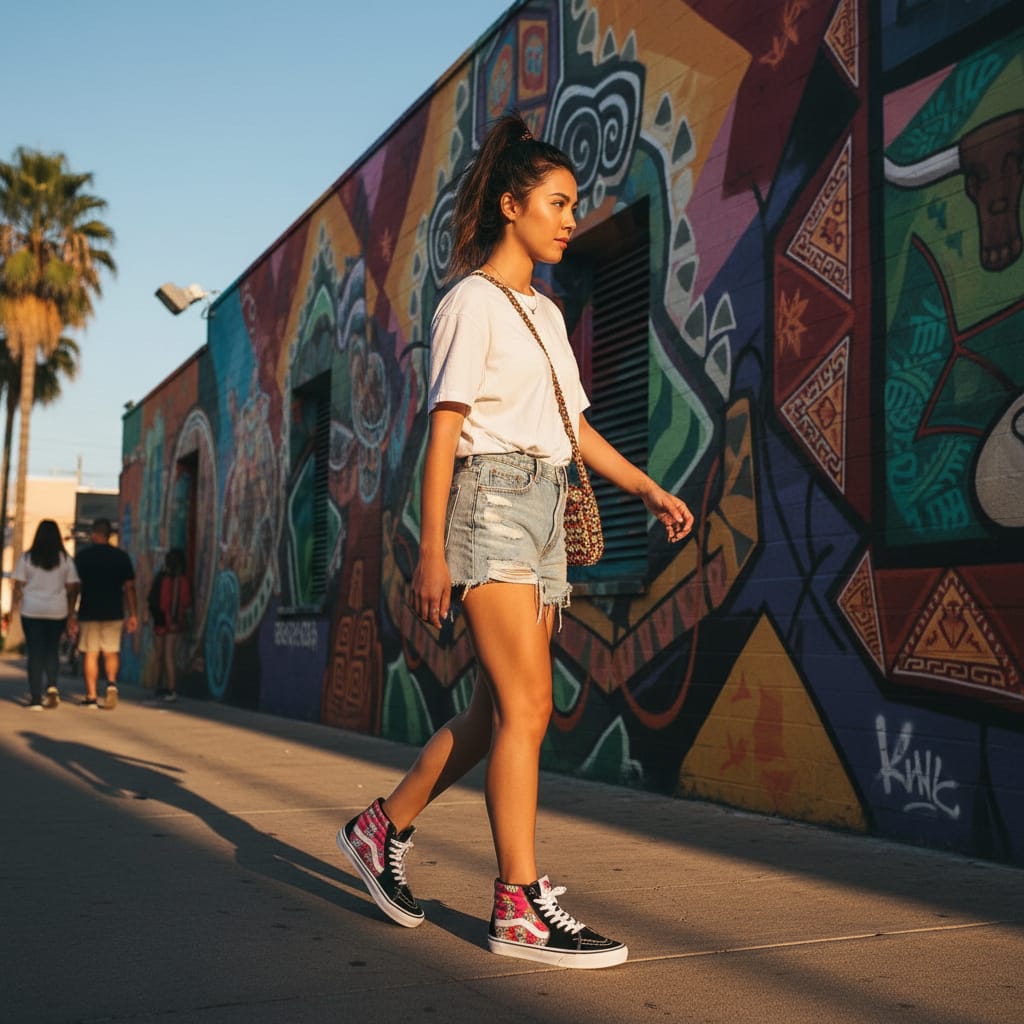
In the monochromatic landscapes of Western metropolises—where concrete grey, navy, and black dominate the visual field—the emergence of Dunda aesthetics represents more than a fashion trend; it is a psychological intervention. ‘Dunda,’ reflecting the vibrant energy of Nairobi’s street culture, utilizes hyper-saturated palettes that trigger immediate neurological responses.
According to the principles of color psychology, the specific hues found in East African streetwear—electric ambers, turquoise, and magenta—act as visual stimulants. When a wearer steps onto a London or New York subway car clad in these patterns, they are not merely dressing for style; they are engaging in dopamine dressing. This phenomenon suggests that wearing bright colors can increase the wearer’s dopamine levels, creating a feedback loop of confidence and mood elevation.
To understand the Dunda impact, we must look at Enclothed Cognition. This psychological concept describes the systematic influence that clothes have on the wearer’s psychological processes. Unlike standard Western streetwear, which often prioritizes silhouette over spectrum, Dunda’s palette carries a cultural weight of celebration.
When an individual wears these distinct East African patterns, they subconsciously adopt the traits associated with the colors: vitality, boldness, and communal connection. The wearer does not just look different; they feel distinct, leading to a measurable increase in risk-taking behavior and social confidence in professional and casual settings.
Urban social dynamics in the West are often governed by ‘civil inattention’—the practice of acknowledging others’ presence without interacting. The Dunda palette acts as a friction point in this dynamic.
High-contrast visibility forces a break in the visual scanning patterns of passersby. In a sea of charcoal suits and beige trenches, the complex geometric poly-chromatism of Kitenge-inspired designs demands cognitive processing. This visibility is the currency of confidence. By making oneself impossible to ignore, the wearer reclaims space in environments designed for anonymity.
Does wearing Dunda make you more approachable? The data suggests yes. While dark colors can signal authority or defensiveness, the warm, solar spectrums (yellows, oranges, warm reds) common in Dunda aesthetics trigger perceptions of warmth and competence.
In high-density urban centers, initiating conversation is often viewed as a social taboo. However, the unique nature of these designs often serves as a ‘triangulation token’—an external object that gives two strangers a safe excuse to interact. The vibrancy of the clothing disarms the usual defensiveness associated with urban encounters.
By projecting an image of unreserved joy through color, the wearer effectively rewires the social dynamic of their immediate environment, transforming a transactional space (like a coffee shop queue) into a relational one.
The integration of Dunda’s palette into Western wardrobes is more than an aesthetic shift; it is a behavioral tool. By leveraging the psychological power of high-saturation color, wearers can hack their own confidence levels while simultaneously softening the rigid social barriers of modern urban life. In a world of greyscale, color is not just decoration—it is a language of power.







Leave a comment